Omron
Relays
Industrial relays and solid-state relays provide galvanic isolation, power switching and protection for your automation and power distribution circuits.
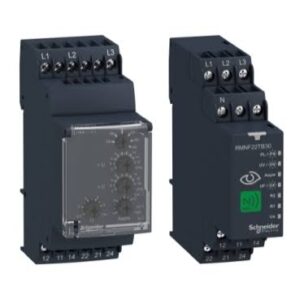
Whether fast-switching solid-state relays for controlling thermal loads or phase and voltage monitoring relays (Omron, Schneider Electric), they ensure the integrity of your signals and equipment.
Discover our selection of new and refurbished solid-state relays, measuring relays and interface components to keep your electrical cabinets operationally reliable.
Since 2007
All Brands
HUNTRON Testers
DHL 48h Delivery
Can't find your reference?
Contact our team
Why buy/repair from 2Tech rather than replacing with new?
Guaranteed compatibility
Save up to 70%
Controlled lead times
The advantages

- Independence vs. manufacturer
- 15 specialized technicians
- Component-level repair
- CSR approach to combat obsolescence
FAQ
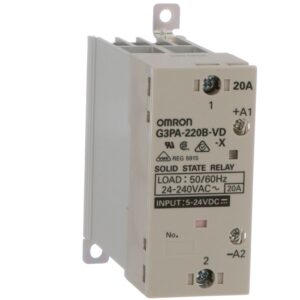
An electromechanical relay uses a coil and physical contacts that are subject to wear and arcing. A solid-state relay (such as the Omron G3PA range) uses semiconductors (triacs/thyristors) with no moving mechanical parts, allowing very high switching rates, a much longer service life and silent operation.
A three-phase monitoring relay continuously monitors the quality of the electrical supply. It detects phase loss, phase sequence reversal, overvoltage or undervoltage, and immediately cuts motor control to prevent any mechanical or electrical damage.
A faulty solid-state relay usually fails short-circuited (the load stays permanently powered) or open (the load no longer switches on). For a phase monitoring relay, the fault shows up as the cabinet refusing to switch on for no reason, or failing to trip when there is a real network fault.
Every relay is tested under real load on a test bench: verification of the control (input) voltage and switching (output) voltage, insulation resistance measurement, on-state voltage drop check for solid-state relays and trip threshold validation for measuring relays.