


Régulation France
Valves
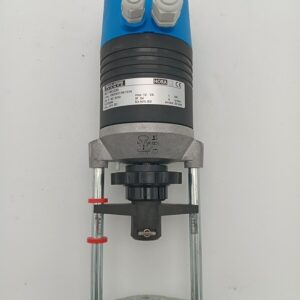
Control valves and globe valves provide precise management of the flow, pressure and temperature of thermal and industrial fluids in your pipework.
Whether two-way or three-way globe valves, such as the Régulation France models, they provide progressive, tight control of the flow of water, steam or process fluids.
Discover our selection of new or refurbished control valves, valve bodies and actuators to maintain the accuracy and tightness of your fluid control loops.
Since 2007
All Brands
HUNTRON Testers
DHL 48h Delivery
Showing the only result
Can't find your reference?
Contact our team
Why buy/repair from 2Tech rather than replacing with new?
Guaranteed compatibility
Save up to 70%
Controlled lead times
The advantages

- Independence vs. manufacturer
- 15 specialized technicians
- Component-level repair
- CSR approach to combat obsolescence
FAQ
A 2-way globe valve acts as a variable restriction on a pipe. Driven by a thermal, electric or pneumatic actuator, it moves its plug along the seat to adjust the flow of fluid through it with great precision, allowing exact control of a temperature or pressure.
Malfunctions most often show up as fluid leaking at the packing gland or stem, seat leakage (the valve no longer closes fully), mechanical sticking of the plug due to scaling or fouling, or no response to opening commands sent by the actuator.
Yes, refurbishing a globe valve includes lapping or replacing the seat and plug, completely renewing the packing (gland) and checking the stem guide. This restores perfect tightness at a much lower cost than replacing the entire actuation assembly.
Every overhauled valve undergoes a pressure tightness test (hydraulic/pneumatic test of the body and plug shut-off), as well as a check of the stem's mechanical stroke and its alignment with the actuator to ensure smooth, jerk-free control.